
What the customer saw
Sixty winged ants emerging from behind a second-floor bathroom baseboard on an April afternoon. The homeowner vacuumed the swarmers and called three other companies before us — all three proposed exterior perimeter spraying. None proposed a structural audit. The customer's concern was that swarmers from inside a wall indicated a mature colony, not a foraging trail, and she wanted someone who would actually find the nest rather than spray the outside of the building.
The inspection
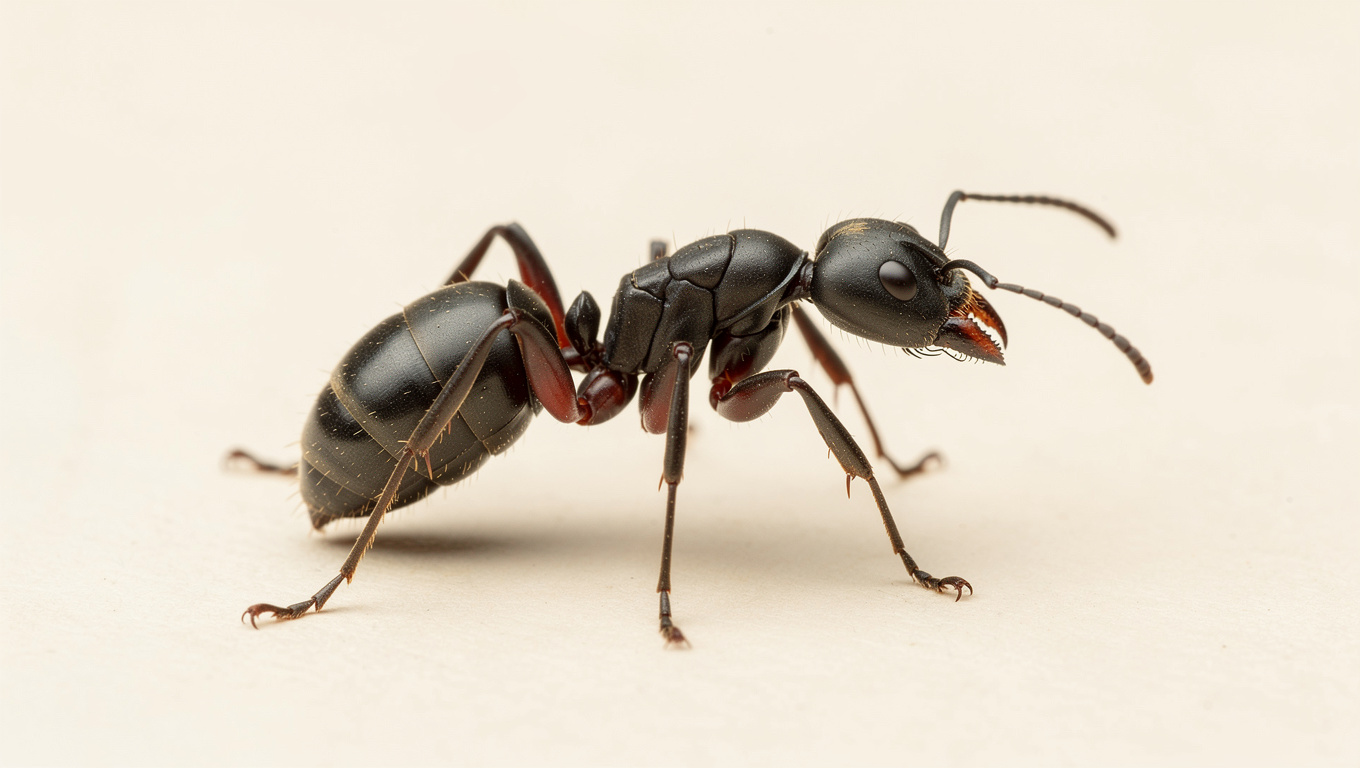
Our technician's initial assessment found: coarse frass accumulating on the upstairs bathroom windowsill, a faint rustling sound in the wall cavity behind the vanity at 10pm during the follow-up site visit, and a hollow-sounding fascia board on the southwest roof corner. Moisture meter readings on the fascia read 28% (wet-saturated). The parent colony was traced to a dead Douglas fir approximately 12 metres from the house — a tree the homeowner had been meaning to remove for two seasons. We confirmed the species as Camponotus modoc (Western carpenter ant) from a worker sample.
The intervention
Three-visit protocol over 21 days. Visit one: non-repellent gel bait placed on confirmed interior trails (upstairs bathroom void, exterior fascia, tree-to-foundation corridor), plus a targeted dust application to the accessible fascia cavity. Visit two at day 10: reassessment, bait replenishment on still-active trails, and full exterior perimeter treatment at foundation level. Visit three at day 21: full inspection, no active trails. Concurrent with treatment we provided the homeowner with a written recommendation: replace the rotted fascia board, remove or fell the dead Douglas fir, and extend the downspout on the affected corner to stop the moisture feed.
The outcome
Zero carpenter ant activity at 60-day follow-up, at 6-month follow-up, and at 18-month follow-up. The homeowner replaced the fascia board within 30 days and felled the Douglas fir the following spring. The 60-day pest guarantee lapsed with no callbacks. The 3-year exclusion warranty remains active. Crucially: we solved the underlying issue (moisture source plus colony source), not the surface symptom (indoor swarmers).
Why three other companies got this wrong
Spraying the exterior of a Craftsman home kills foraging workers on contact — but it does nothing to a satellite colony already established inside the roof framing, and it does not touch a parent colony 12 metres away in a dead tree. Within three months, foragers from the undisturbed parent colony repopulate the exterior and the homeowner is back where they started. The structural issue is a moisture issue. Until that's addressed, no amount of perimeter spraying will hold. This is why our protocol always pairs treatment with a moisture-source audit.
Customer outcome“Three other companies said they'd spray and come back if it didn't work. The Wild Pest said they'd find the colony and close it out. Eighteen months later I haven't seen a single ant. I wish I'd called them first.”
Book your own assessment
Every job gets the same documentation standard — photos, findings, protocol, outcomes. 60-day pest guarantee plus 3-year exclusion warranty on every treatment.