
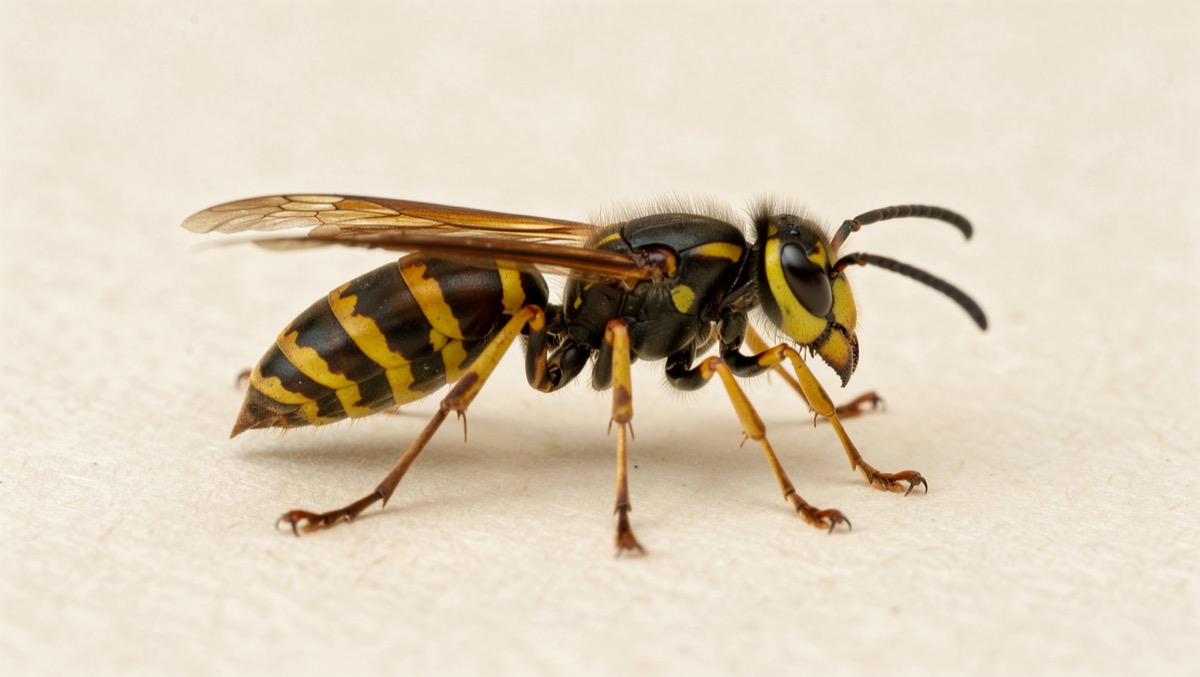
Why yellowjacket activity is specific to Beach Grove
Beach Grove yellowjacket activity has a distinctly coastal pattern. Cooler ocean-air summers mean colonies grow slightly slower than inland (peak nest size lower in some years), but the longer mild fall extends activity well into October — sometimes November in warm years. Cedar-shake gables, soffit returns, and beach-cottage architectural details provide aerial-nest sites. Beach-equipment storage areas (cottage sheds with kayaks, paddleboards) create excellent nest-shelter conditions. Outdoor-dining patio culture (Beach Grove residents spend a high fraction of summer outside) creates food-attractant gradients. Boundary Bay's protected estuary edges produce abundant ground-nest opportunities. We get yellowjacket callouts well into October from Beach Grove that we no longer get from Sunshine Hills.
Local signs in Beach Grove
- Yellowjackets entering cedar-shake gable gaps and fascia returns.
- Late-fall activity around outdoor-dining tables (well past Sunshine Hills' season end).
- Ground-nest entries in lawn near beach-equipment storage.
- Wasps in beach-towel storage and patio-cushion bins.
- Aggressive activity around recycling and food-waste bins through October.
Seasonality in Beach Grove
Beach Grove yellowjacket activity peaks August-September; mild-fall years see active nests through October and occasionally into early November.
What to do right now
If you've spotted yellowjacket nest activity around a Beach Grove cottage, especially late in the season, book same-day removal — late-season coastal nests can be larger and more aggressive than Sunshine Hills equivalents.
Book Yellowjacket service in Beach Grove
Same-day for active issues. Same-day arrival typical from our Sunshine Hills dispatch.; ferry traffic on Highway 17 occasionally shifts the window. Every treatment is documented with photos, a 60-day pest guarantee, and 3-year exclusion warranty.